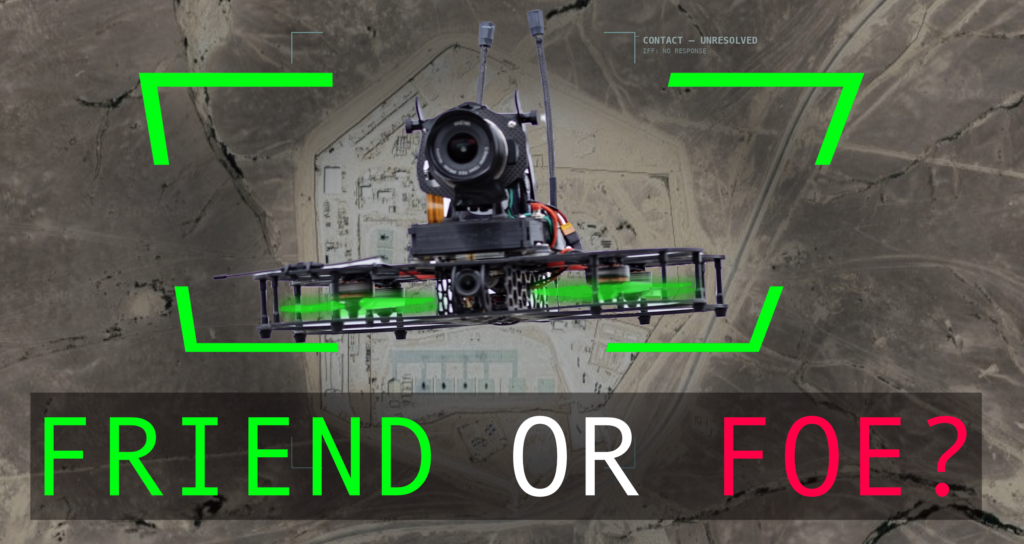
On 28 January 2024, a drone struck Tower 22, a US military outpost in northeastern Jordan, killing three American soldiers and wounding more than forty others. The base was equipped with radar, counter-drone systems, and trained personnel — none of which prevented the attack, because the failure was not one of detection. Soldiers monitoring the base defense operations center had observed radar tracks approaching from the south but had not investigated them, in part because a US surveillance drone operated by Task Force 99 — a CENTCOM unit that deliberately operated cheap commercial and 3D-printed platforms precisely because their low cost made them expendable — was returning to base at almost exactly the same moment, and there was no reliable means of distinguishing one from the other.1
This was a failure of identification, and it is precisely the kind of failure that is becoming more frequent as unmanned systems saturate every domain of modern conflict. The radar saw the drone. What it could not do was tell anyone whether that drone belonged to them.
The architecture at the root of this problem is one the defense world has relied on since the Second World War. Identification Friend or Foe systems built around radio frequency interrogation were designed for a different era — one in which platforms were expensive, relatively few in number, and purpose-built to carry the electronics required to participate in an RF exchange. That era is over, and the gap between what RF-based IFF was designed for and what it is now being asked to do is widening with every conflict.2